
The False Telephone Call
The Murder of Roger AckroydThis flow traces how the call that summons Sheppard is engineered, investigated, and ultimately connected to the killer’s alibi.
increasing Bearing strength in each event
 decreasing
Bearing strength in each eventdecreasingA Call from the Station
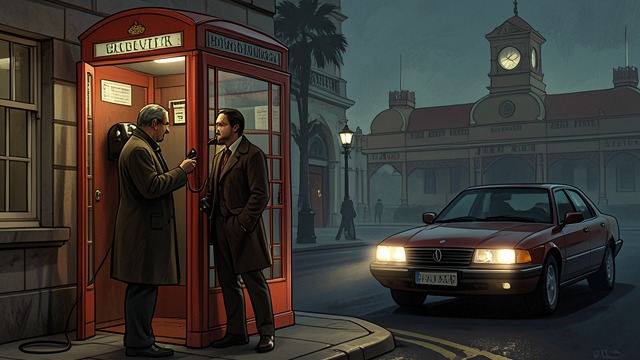
A Call from the Station
A summons arrives
A caller impersonating Parker tells Dr. James Sheppard that Ackroyd has been murdered. Sheppard drives to Fernly and discovers that Parker made no call.
An invented emergency
The message creates the appearance of an urgent, independent summons. It also brings Sheppard to the scene at precisely the moment he needs to remove evidence.
The Station Connection
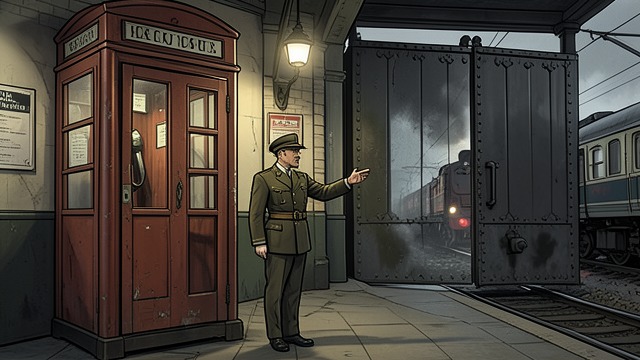
The Station Connection
A public call office
Colonel Melrose learns that the call came from a telephone box at King’s Abbot station. The Liverpool express departed minutes later.
A misleading destination
The timing suggests that Ralph may have fled by train. Poirot instead asks why the call was made, treating its result as more important than its apparent destination.
Ralph Becomes the Explanation
Ralph Becomes the Explanation
Flight seems to fit
Inspector Raglan interprets the call as a sign that Ralph escaped after the murder. His disappearance and the departing train appear to reinforce each other.
A convenient assumption
The theory never explains why Ralph would summon the doctor while fleeing. Poirot keeps the unexplained call in view as a possible route into the true plan.
The Call as a Timed Device
The Call as a Timed Device
Discovery brought forward
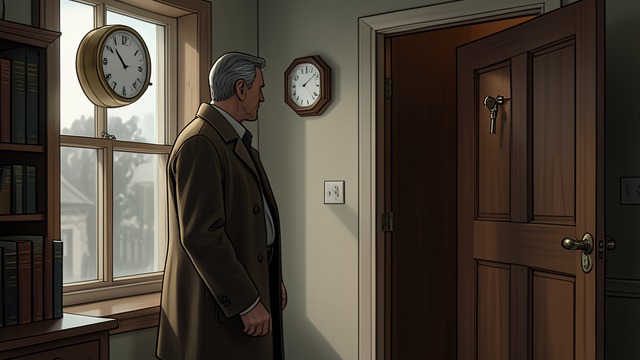
Poirot reasons that the call ensured the body would be found that night rather than the next morning. Its timing guarantees the murderer a chance to be present during the first search.
A missing object matters
The murderer needed to recover something from the table by the window before police arrived. The call is not escape cover alone, but part of an evidence-removal plan.
The Real Caller’s Link
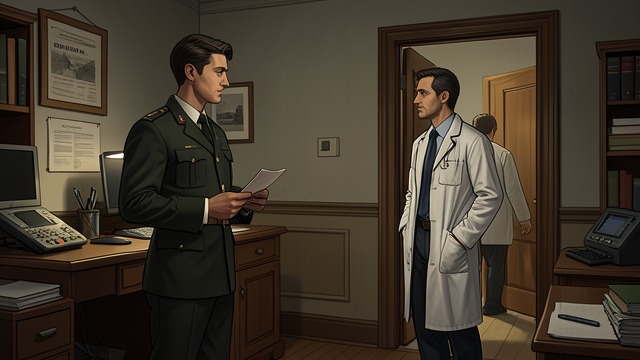
The Real Caller’s Link
A genuine intermediary
The call was placed by a ship’s steward, whom Sheppard had visited as a patient. The doctor had asked him to leave a note and telephone the result.
A false message
The steward reported “No answer,” but Sheppard claimed a different conversation. The call was real, while its supposed content was fabricated to bring him to the study.
Friday night, at about ten fifteen
Saturday morning after the murder
During Raglan’s initial theory
During Poirot’s reconstruction of the study
At the ending, after the wireless reply
